Electronic Health Records Face Many Insider Snoops
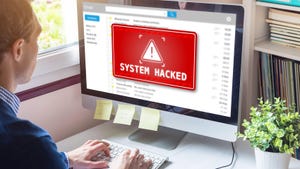
Nosy staff members committed most of the personal data breaches that hit more than 70% of healthcare organizations last year, survey says.The survey of 90 healthcare IT managers was conducted by Veriphyr, a Los Altos, Calif., based provider of identity and access intelligence solutions. It also found that 30% of breaches were detected in one to three days, 12% were discovered in one week, and 17% were uncovered during a period of two to four weeks.
More Healthcare Insights
White Papers
- How To Regain IT Control In An Increasingly Mobile World - by BlackBerry
- Red Alert: Why Tablet Security Matters - by BlackBerry
Reports
More >>Webcasts
- Maximize ROI with Database Consolidation onto Private Clouds
- Five Jobs You Can Do Better with Intelligent Decision Automation
According to Alan Norquist, CEO of Veriphyr, what surprised him the most about the report, Veriphyr's 2011 Survey of Patient Privacy Breaches, was the number of breaches committed by employees.
"While the loss of patient data on hard drives and USB sticks gets a lot of coverage, the top concern of compliance officers is the few employees who misuse the legitimate access to snoop on patient data," Norquist told InformationWeek Healthcare. He also noted that it is often harder for an employee to inappropriately access paper records when compared with electronic health records.
Norquist observed that with paper files, an employee has to ask a person at the records office to get the paper files, and that person will usually be suspicious if a staff member is asking for the records of a VIP, his boss, or his ex-wife.
"With electronic medical records, the employee can call up almost anything with a few keystrokes with no questions asked. What healthcare organizations need in the world of digitized medical records is identity and access intelligence tools that can monitor logs of employee access to patient data and discover the few employees misusing their access to patient data by snooping on VIPs, fellow employees, friends, relatives, and neighbors," Norquist added.
Other findings of the report showed that:
-- 79% of respondents were "somewhat concerned" or "very concerned" that their existing controls do not enable timely detection of breaches of PHI;
-- 50% stated they did not have adequate tools for monitoring inappropriate access to PHI; and
-- 47% plan to invest more in improving detection and response capability in the next 12 months.
The report concluded: "While respondents agreed that senior management and IT were supportive of and listened to recommendations for improvement in compliance and security efforts, the timeliness of response to requests for improvement (particularly from IT) was an important factor in determining whether respondents also indicated satisfaction with tools for monitoring inappropriate access to PHI. In turn, respondents who indicated strong satisfaction with their monitoring tools also tended to report fewer breaches of PHI and faster resolution times. The reverse is also true: respondents who indicated dissatisfaction with their monitoring tools tended to report more breaches and longer resolution times."
In his interpretation of the survey's results, Norquist said the focus should not be on tools for security, but rather on tools that monitor employee access to PHI as well as identify employees misusing their access to snoop on VIPs, fellow employees, friends, relatives, and neighbors' data.
"The problem is not authentication to keep the bad guys out, but monitoring the employees who have almost unrestricted access to patients' data. The reason this data is greatly unrestricted is because in a life or death situation you would not want to prevent a doctor or nurse from getting the patient data they need right away," Norquist said.
Find out how health IT leaders are dealing with the industry's pain points, from allowing unfettered patient data access to sharing electronic records. Also in the new, all-digital issue of InformationWeek Healthcare: There needs to be better e-communication between technologists and clinicians. Download the issue now. (Free registration required.)
Related Reading
| To upload an avatar photo, first complete your Disqus profile. | View the list of supported HTML tags you can use to style comments. | Please read our commenting policy. | |
|
|
T-Shirt Giveaway: Each week we're selecting one great comment from our readers. The author of the comment will receive an InformaitonWeek Community t-shirt. So get posting! |
Subscribe to RSSResource Links
This Week's Issue
Free Print Subscription
SubscribeCurrent Government Issue
- Going Mobile: As federal agencies embrace devices and apps to meet employee demand, the White House seeks one comprehensive mobile strategy.
- Smartphone Security: The National Security Agency is developing technologies to make commercial devices suitable for intelligence work.
- Read the Current Issue
Technology Whitepapers
- Mobile BI: Actionable Intelligence for the Agile Enterprise
- Creating the Enterprise-Class Tablet Environment - by Yankee Group
- How To Regain IT Control In An Increasingly Mobile World - by BlackBerry
- Red Alert: Why Tablet Security Matters - by BlackBerry
- New Visual and Wizard-Driven Paradigms for Exploring Data and Developing Analytic Workflows
Featured Resource
Read the report to find out how desktop virtualization has helped these organizations improve efficiency in the IT department, drive adoption of EMR applications, and support clinician mobility with wireless access, various client hardware options, and single sign-on.
Learn More
Featured Reports
Featured Webcasts
- Maximize ROI with Database Consolidation onto Private Clouds
- Effective IT Inventory and Asset Management: From Quagmire to Quick Fix
- Outsourcing Security: What Every Potential Cloud Security Customer Should Know
- Server Virtualization Gets Relief From Tivoli Storage Manager for Virtual Environments
- The ABC's of Cloud Computing in the Midmarket