Commentary

Serdar Yegulalp
 

Open Source: The Way, Not The Goal

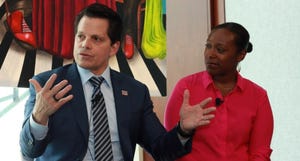
I didn't make it to OSCON this year, so I missed out on more than a few nifty events. One was a panel chaired by Matt Asay of Alfresco, where he cited research to show that companies do switch to open source as a way to save money, but that there are other, much larger goals beyond that.

I didn't make it to OSCON this year, so I missed out on more than a few nifty events. One was a panel chaired by Matt Asay of Alfresco, where he cited research to show that companies do switch to open source as a way to save money, but that there are other, much larger goals beyond that.


More Software Insights

White Papers

More >>

Reports

More >>

Webcasts

More >>

Matt's discussion of this issue hinges on two things: 1) it costs nothing upfront (well, almost nothing -- let's say a negligible amount) to acquire the software and determine if it's a proper fit for one's business, and 2) the customer can spend that much less all the way down the line to get precisely what they need. And then there are other things that materialize further on down the line -- like how maintenance and support costs break down and where the money goes for that.

What's most interesting about this particular analysis: they based it on real-world research from companies actually doing this stuff, not speculatively-crunched numbers. They went to the people who had actually deployed open source in-house, rather than the vendors themselves. They're the best ones to talk to, since they've actually burned the oil to make things work.

The real goals beyond saving money are things I've seen in other realms, as when I was talking to the FAA earlier this week: avoiding dependence on any one vendor, or having the freedom to roll your own solutions from existing ones. That goes back into something Matt mentioned: "Open source tends to offer best-of-breed solutions that aim to do a limited range of functions well, rather than to be all things to all people." If you know you only want a few things done right, you take those pieces and use them.

This isn't to say that there won't be people who can't thrive on a totally packaged solution. This also isn't to say that someday proprietary software vendors will offer things that are just as flexible in their own way; perhaps some already do. But when you're dealing with business processes, rather than programming-in-the-abstract, the goal isn't "open source". It's lower cost, more flexible ways of getting things done, that whole bag of goodies.

Those should be the real goals of any upscale open source project: to figure out how to offer people ways to do things more flexibly, and to make the whole issue of open source a peripheral one. It won't matter how it's put together, only that it's put together better.

InformationWeek Analytics has published an independent analysis of the next-generation Web applications. Download the report here (registration required).

Follow me and the rest of InformationWeek on Twitter.


Related Reading


Currently we allow the following HTML tags in comments:

Single tags

These tags can be used alone and don't need an ending tag.

<br> Defines a single line break

<hr> Defines a horizontal line

Matching tags

These require an ending tag - e.g. <i>italic text</i>

<a> Defines an anchor

<b> Defines bold text

<big> Defines big text

<blockquote> Defines a long quotation

<caption> Defines a table caption

<cite> Defines a citation

<code> Defines computer code text

<em> Defines emphasized text

<fieldset> Defines a border around elements in a form

<h1> This is heading 1

<h2> This is heading 2

<h3> This is heading 3

<h4> This is heading 4

<h5> This is heading 5

<h6> This is heading 6

<i> Defines italic text

<p> Defines a paragraph

<pre> Defines preformatted text

<q> Defines a short quotation

<samp> Defines sample computer code text

<small> Defines small text

<span> Defines a section in a document

<s> Defines strikethrough text

<strike> Defines strikethrough text

<strong> Defines strong text

<sub> Defines subscripted text

<sup> Defines superscripted text

<u> Defines underlined text

InformationWeek encourages readers to engage in spirited, healthy debate, including taking us to task. However, InformationWeek moderates all comments posted to our site, and reserves the right to modify or remove any content that it determines to be derogatory, offensive, inflammatory, vulgar, irrelevant/off-topic, racist or obvious marketing/SPAM. InformationWeek further reserves the right to disable the profile of any commenter participating in said activities.

Disqus Tips To upload an avatar photo, first complete your Disqus profile. | View the list of supported HTML tags you can use to style comments. | Please read our commenting policy.
T-Shirt Giveaway T-Shirt Giveaway: Each week we're selecting one great comment from our readers. The author of the comment will receive an InformaitonWeek Community t-shirt. So get posting!
Subscribe to RSS

Resource Links