Commentary

John Foley
Editor, InformationWeek  

Million-Dollar Private Clouds

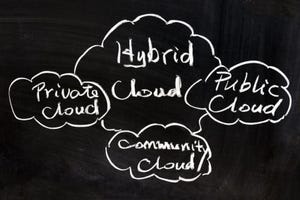
Private clouds that emulate the characteristics of public cloud services sound promising, but they won't necessarily be fast, easy, or cheap to create. A recent meeting with Cassatt CEO Bill Coleman reinforced that impression, especially when I heard about the price tag associated with them.

Private clouds that emulate the characteristics of public cloud services sound promising, but they won't necessarily be fast, easy, or cheap to create. A recent meeting with Cassatt CEO Bill Coleman reinforced that impression, especially when I heard about the price tag associated with them.Cassatt is an interesting company. Founded in 2003, Cassatt's Active Response software optimizes data center resources by capturing the object code of applications, pooling servers, and distributing workloads based on IT policies. It's not the same thing as virtualization, though virtual machines are involved. Coleman says Cassatt can help IT departments get server utilization into the 80% range, compared with 20% to 40% when just virtualization is employed.

"We can provide the value you get from Amazon or Google cloud services in your own data centers for applications that you can't put out there," says Coleman.


More Insights

White Papers

More >>

Reports

More >>

Webcasts

More >>

Cassatt gets its foot in the door with a promise of lowering energy consumption; highly optimized server utilization leads to consolidation and, thus, lower costs. The standard edition of Cassatt Active Response delivers these energy efficiencies for a licensing fee of $250 per server.

Cassatt's full-blown capabilities -- server workload management, high application availability across data centers, and more -- cost considerably more, in the range of $2,500 per server. Multiply that by 1,000 servers, and you get a sticker price of $2.5 million. Large corporations may have tens of thousands of servers. Coleman says one customer's deployment rang up, before discounts, at $50 million.

How many small and medium-sized businesses can afford to deploy private clouds (Cassatt calls them internal clouds) at those prices? Answer: none.

In fact, you might ask whether large companies can afford it, and the answer is more nuanced. Cassatt has only about a dozen customers, big organizations like the U.S. Army and Bank of America. But Coleman says customer leads have quadrupled in the past two months, as more CIOs, CTOs, and other IT pros take a serious look at cloud computing. The five-year-old Cassatt is on track to turn cash-flow positive this quarter if sales hold up.

Of course, few boards will bless multimillion dollar software expenditures in this economy, so Cassatt has had to address that in its contracts. The deal is this: Customers will see a full return on their investment within the first year, and subsequent roll outs will be funded from savings as well.

In other words, the software pays for itself through energy savings, server consolidation, smaller IT staffs, and reduced investment in disaster recovery since multisite resiliency is part of what you get. A major upgrade to Cassatt's platform, due in the fall, will add hierarchical policy management, "arbitrary scalability," and other capabilities that make it better suited for distributed, multitenant data center environments.

IT pros have long heard the largely unfulfilled promise of "data center automation," where workloads shift to available resources as needed on the fly. Cassatt and other private cloud vendors will have to show that they're not just another IT automation play (autonomic computing, Dynamic Systems Initiative, etc.) by another name. Private clouds sound compelling, but we need more real-world examples that demonstrate their feasibility, benefits, and ROI.


Related Reading


Currently we allow the following HTML tags in comments:

Single tags

These tags can be used alone and don't need an ending tag.

<br> Defines a single line break

<hr> Defines a horizontal line

Matching tags

These require an ending tag - e.g. <i>italic text</i>

<a> Defines an anchor

<b> Defines bold text

<big> Defines big text

<blockquote> Defines a long quotation

<caption> Defines a table caption

<cite> Defines a citation

<code> Defines computer code text

<em> Defines emphasized text

<fieldset> Defines a border around elements in a form

<h1> This is heading 1

<h2> This is heading 2

<h3> This is heading 3

<h4> This is heading 4

<h5> This is heading 5

<h6> This is heading 6

<i> Defines italic text

<p> Defines a paragraph

<pre> Defines preformatted text

<q> Defines a short quotation

<samp> Defines sample computer code text

<small> Defines small text

<span> Defines a section in a document

<s> Defines strikethrough text

<strike> Defines strikethrough text

<strong> Defines strong text

<sub> Defines subscripted text

<sup> Defines superscripted text

<u> Defines underlined text

InformationWeek encourages readers to engage in spirited, healthy debate, including taking us to task. However, InformationWeek moderates all comments posted to our site, and reserves the right to modify or remove any content that it determines to be derogatory, offensive, inflammatory, vulgar, irrelevant/off-topic, racist or obvious marketing/SPAM. InformationWeek further reserves the right to disable the profile of any commenter participating in said activities.

Disqus Tips To upload an avatar photo, first complete your Disqus profile. | View the list of supported HTML tags you can use to style comments. | Please read our commenting policy.
T-Shirt Giveaway T-Shirt Giveaway: Each week we're selecting one great comment from our readers. The author of the comment will receive an InformaitonWeek Community t-shirt. So get posting!
Subscribe to RSS

Resource Links