Commentary

Vanessa Alvarez
 

Structure 2010: Economics Of Cloud

I'm at the Structure 2010 conference, where panelists on the "Cloudonomics: Economics of the Cloud" session were focused on what they are seeing happening in the cloud, from their customers' perspectives.

I'm at the Structure 2010 conference, where panelists on the "Cloudonomics: Economics of the Cloud" session were focused on what they are seeing happening in the cloud, from their customers' perspectives.Some of the more interesting topics at the session were:

  • Evolving Cloud Computing Value Proposition

    More Insights

    White Papers

    More >>

    Reports

    More >>

    Webcasts

    More >>

    While cost still continues to be the primary reason for enterprises to think about deploying this model, it's no longer the only reason. The benefits and value are starting to sink in with enterprises.

    As organizations look to remain competitive, a highly scalable, flexible, and on-demand IT environment is critical. The pertinent question is how to start the process of transforming the IT environment, and what applications and workloads can effectively and efficiently benefit from cloud.

  • Changing CIO & IT Roles

    Many panelists pointed out that the disconnect between IT and line-of-business (LOB) managers continues to be challenging. IT is really not aware of who is using public cloud services and therefore, doesn't really see the need for deploying a cloud computing model that will deliver the features and functionalities that LOB managers are turning to the public cloud for.

  • No "One-Size Fits All"

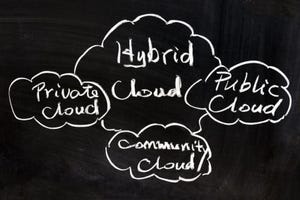
    The question is not about one cloud or the other, but about having the right mix. I've written before about this topic. The problem is that the solutions today are not focusing on the specific needs of the business. In order to help an enterprise choose the right model, it's necessary to understand what the business needs are. It may not be about cost efficiency more than it is about high performance or scalability.

  • Transformation Of The Data Center

    Enterprises looking to leverage their IT environments for competitive advantage are, in fact, beginning to transform their data centers to deliver more resources and overall cost efficiencies through cloud computing models.

    The market now realizes that it is not a "one cloud fits all" world. Individual enterprises have unique needs which must be understood before a solution can be chosen that fits their needs. This requires a combination of technological and business acumen, as well as an understanding of the enterprise's specific vertical.


    Virtualization and cloud computing have taken over the mantle of hottest technology that only a few years ago was held by unified communications, but that doesn't mean it's easy to align the cloud with UC--or any major initiative, for that matter. Download our report here (registration required).


  • Related Reading


    Currently we allow the following HTML tags in comments:

    Single tags

    These tags can be used alone and don't need an ending tag.

    <br> Defines a single line break

    <hr> Defines a horizontal line

    Matching tags

    These require an ending tag - e.g. <i>italic text</i>

    <a> Defines an anchor

    <b> Defines bold text

    <big> Defines big text

    <blockquote> Defines a long quotation

    <caption> Defines a table caption

    <cite> Defines a citation

    <code> Defines computer code text

    <em> Defines emphasized text

    <fieldset> Defines a border around elements in a form

    <h1> This is heading 1

    <h2> This is heading 2

    <h3> This is heading 3

    <h4> This is heading 4

    <h5> This is heading 5

    <h6> This is heading 6

    <i> Defines italic text

    <p> Defines a paragraph

    <pre> Defines preformatted text

    <q> Defines a short quotation

    <samp> Defines sample computer code text

    <small> Defines small text

    <span> Defines a section in a document

    <s> Defines strikethrough text

    <strike> Defines strikethrough text

    <strong> Defines strong text

    <sub> Defines subscripted text

    <sup> Defines superscripted text

    <u> Defines underlined text

    InformationWeek encourages readers to engage in spirited, healthy debate, including taking us to task. However, InformationWeek moderates all comments posted to our site, and reserves the right to modify or remove any content that it determines to be derogatory, offensive, inflammatory, vulgar, irrelevant/off-topic, racist or obvious marketing/SPAM. InformationWeek further reserves the right to disable the profile of any commenter participating in said activities.

    Disqus Tips To upload an avatar photo, first complete your Disqus profile. | View the list of supported HTML tags you can use to style comments. | Please read our commenting policy.
    T-Shirt Giveaway T-Shirt Giveaway: Each week we're selecting one great comment from our readers. The author of the comment will receive an InformaitonWeek Community t-shirt. So get posting!
    Subscribe to RSS

    Resource Links