Welcome Guest. | Log In| Register | Membership Benefits

  • Email this page E-mail
  • |  Print Print
  • |   Bookmark and Share
  • icon

Ray Lane: VC Talks About What's In Store For Software Companies


Now that the recession is over, the risk is that enterprise software buyers and vendors will return to the same old way of doing business.


THE FUTURE OF SOFTWARE


>

The Future Of Software homepage

>

Ray Lane: What's In Store For Software Companies

>

Industry In Flux

>

Apps To Die For

>

Industry Leaders Look To Software's Future

>

What's The Next Killer App?

>

Share The Load

>

Get That Team Spirit

>

In The Fast (Growth) Lane

>

A Windows World?

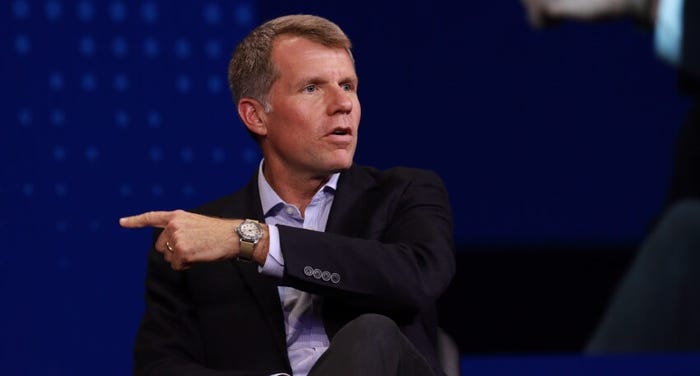
Illustration by Brian StaufferDuring a trip to India earlier this year, Ray Lane, a general partner at venture-capital firm Kleiner Perkins Caufield & Byers, started putting together some ideas about what he says is the dismal state of the software industry. Suppliers discount heavily to meet sales targets, CIOs look heroic for buying software they don't need at a good price, and no one ends up happy in the long run. Lane, who previously spent eight years at Oracle, where he was president and chief operating officer, and who's also worked at Booz Allen Hamilton, EDS, and IBM, turned his ideas into a series of talks he's given to tech-industry audiences this year. InformationWeek senior writer Aaron Ricadela recently spoke with Lane about how he'd change the way business software is sold.

InformationWeek: You said at an InformationWeek conference in California in September that software companies need to take more of a stake in the outcome of IT projects built with their code. How widely have you been discussing this idea, and what was its genesis?

Lane: That was one of the first times I'd codified it into a presentation. I was on a two-week trip to India in March of this year where I had some downtime and started to put a new presentation together. I was getting disenchanted--downright sick to my stomach--that after we went through this recession in enterprise software, as we came out, it was possible we could return to the same old, same old.

Your friendly SAP or Oracle salesman would show up and say, "How much do you want to buy today?'" And you'd buy a discounted, perpetual license up front and the company says, '"Good luck, let us know if it doesn't work. And of course we'll allow you to pay us 15% a year to call us if it doesn't work."

I'm not naive that it won't be hard to displace that as a business model. As the salesman approaches the end of a quarter or year, he'll find the attractive price point for that customer--and everyone has one. Users buy futures, and they're addicted to this business model that lets them get huge discounts against the list price, which is a false price made up about 10 minutes before the product ships. No one pays list, so you're discounting against a false ceiling. But you're a hero if you can pound down Microsoft or Oracle 80%--whether you needed that software or not.

InformationWeek: What are the consequences of that business model?

Lane: The recession made us feel like maybe we didn't need to do that. The question now is whether it will come back. The recession is over, there's more IT spending--PCs, databases, and operating systems need to be upgraded because companies have put off spending. But it's going to take changes on both sides, which is difficult.

It's important for companies to have a variable cost structure, so if they're not getting value, they can take those costs out of their income statement. I don't know of a company today on a global basis that wants to invest in fixed infrastructure that can't be downsized, because of the world situation today, whether because of terrorism, slow growth, or other factors.

InformationWeek: So buying software for future use locks companies into costs?

Lane: The poster child for this has been Oracle. Microsoft has become good at it. And Siebel has gone to the head of the class, because they have all that software sitting on the shelf. If it's going to take you two to three years to make that software productive, the salesman is long gone by the time it gets rolled out, and there's no accountability. Because of the software I've locked myself into a number of things I can't change, and I don't know of too many software companies that return money. They say in the contract 'We'll only rebate you if it doesn't work.' Well, if I test drive a new car, it works fine on the lot, works fine when I get it home, but something goes wrong after 10,000 miles, it's under warranty. The software guys give you 15 days.

Page 2: 
1 | 2 Next Page »


Subscribe to RSS


Advertisement


Get InformationWeek in Print

Apply for a free 52-week subscription to InformationWeek (a $199 value)


NOTE: Offer valid for U.S., U.S. possessions, & Canada only.