Top FBI Cyber Cop Recommends New Secure Internet
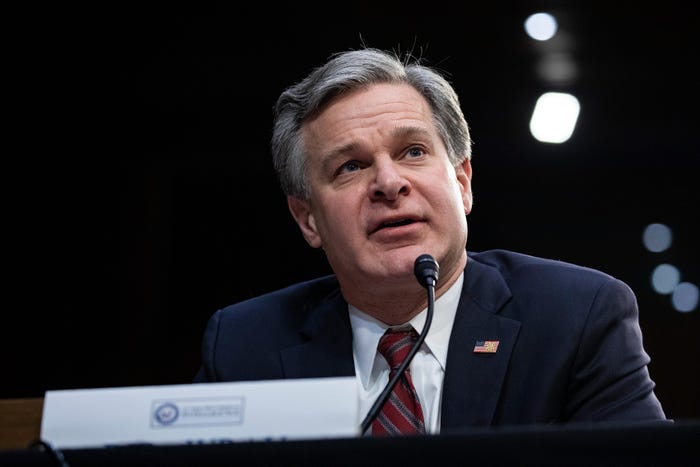
Shawn Henry says current Internet will never be secure enough to beat hackers or meet the security needs of critical infrastructure providers."Computer security has become an endless game of defense which has become incredibly costly and is unsustainable in the long term," Shawn Henry, the executive assistant director for the FBI's criminal, cyber, response, and services branch, said in a speech at an Information Systems Security Association event. "The current system will never be good enough, but it's too late for us to disconnect."
More Government Insights
Webcasts
- Single Source of Truth for Managing Critical Assets Application Consolidation across Public Sector Organizations
- Reliable Information for Actionable Insights
White Papers
More >>Reports
More >>While Henry noted that he didn't have all the answers for how future networks should look, he did sketch out some rough elements, including the use of strict access rules and authentication to ensure that only trusted employees have access to critical infrastructure networks. The network would use the same core infrastructure as the regular Internet. Government, critical infrastructure companies, and the technology industry must work together on its design, he said.
[Could an attack by an organization like Anonymous Cripple Critical U.S. Infrastructure?]
The idea of a separate or quasi-separate Internet for critical infrastructure is one that has been tossed around some over the last year-plus. NSA director and Cyber Command commander Gen. Keith Alexander has called for a "secure, protected zone" on the Internet that others have nicknamed "dot secure." Officials and experts discussed the idea at length at a Senate hearing in June.
Henry said that critical infrastructure systems are increasingly under attack, and cautioned that he is concerned that attacks could "paralyze cities" and that "ultimately, people could die." He said, "I know it sounds alarmist, but it's real based on my observations."
Henry said that he was concerned about several primary bad actors, including foreign intelligence services, organized crime groups, terrorist groups, and compromised insiders. He noted a recent attack in which a foreign intelligence service likely compromised 10 years worth of research at a company, and another that breached the encryption capabilities of a major multinational financial company and was resident on the network for months, stealing millions.
"I couldn't tell you the number of times we've walked into a company and told them that they'd been breached, in many cases for months at a time, and they have no idea," Henry said.
The FBI has made cybersecurity a top priority in recent years. It now has "cybersquads" in every field office, and has made it a point to hire technologists and teach them to become agents. The FBI is also partnering widely with private sector and foreign organizations, and has FBI employees embedded with police in countries like Estonia and the Ukraine.
FBI officials are also increasingly monitoring threats rather than just responding to individual intrusions, and has had recent success in preventing attacks before they occur, Henry said.
Join us for GovCloud 2011, a day-long event where IT professionals in federal, state, and local government will develop a deeper understanding of cloud options. Register now.
Related Reading
| To upload an avatar photo, first complete your Disqus profile. | View the list of supported HTML tags you can use to style comments. | Please read our commenting policy. |
Subscribe to RSSResource Links
Related Webcasts
- Single Source of Truth for Managing Critical Assets Application Consolidation across Public Sector Organizations
- Reliable Information for Actionable Insights
- The view is better up here: breaking through barriers to Cloud
- Supporting an Enterprise-wide Data Archive and Retention Strategy
- High-Frequency Trading: The Good, The Bad and The Ugly
This Week's Issue
Free Print Subscription
SubscribeCurrent Healthcare Issue
- InformationWeek Healthcare CIO 25: Our second annual honor roll of the health IT leaders driving healthcare's transformation.
- EHR Unreadiness: Only a small percentage of physicians planning to apply for Meaningful Use funds have e-health record systems capable of achieving most of the requirements. .
- And much more!
- Read the Current Issue
Related Whitepapers
- Advanced Case Management: Making its Mark on Key Government Sectors
- Unleashing Cloud Performance
- The Creating value in the Public Sector: intelligent project selection in the US federal government
- Improve Business Performance in a Project-Intensive World
- Defining and Planning Continuous Monitoring for NIST Requirements
Featured Whitepaper
In this white paper, Tripwire discusses strategies for defending cyber threats that include monitoring security status of systems throughout the enterprise, detecting threats to sensitive data, and responding to threats in real-time.
Learn More