Ford Shows 'Car That Cares' At CES
Automaker updates in-car health monitoring via Sync system, adds partnerships with Microsoft, Healthrageous.At last week's 2012 International Consumer Electronics Show in Las Vegas, Ford dubbed its concept "the car that cares" and showed a mock-up of a dashboard equipped with the Microsoft-powered Sync "infotainment" system wirelessly connected to health-related smartphone apps and portable medical devices.
More Healthcare Insights
Webcasts
- Forrester Total Economic Impact study of Midrange Storage
- Health Insurance Billing Strategies: Preparing for an Uncertain Future
White Papers
- The value of analytics in healthcare: From insights to outcomes
- Redefining Value in Healthcare: Innovating to expand access, improve quality and reduce costs of care
Reports
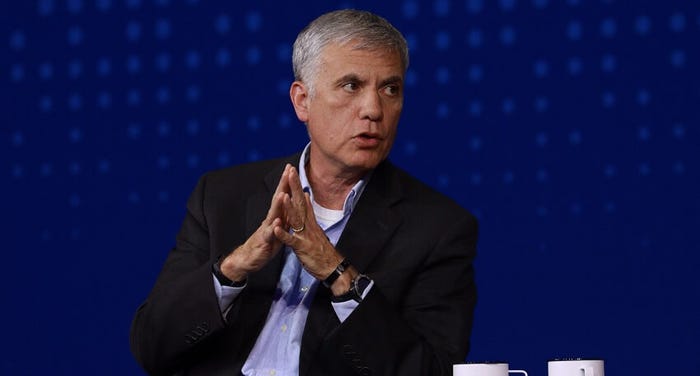
More >>"Sync will be Ford's key technology supporting activities in the health and wellness sphere," Gary Strumolo, manager of infotainment, interiors, health, and wellness in the Ford Research and Innovation division, said during a presentation at the CES Digital Health Summit. Strumolo noted that many people spend hours at a time behind the wheel, making their cars a convenient and private environment for delivery of health and wellness coaching. "It’s the only logical place for people to manage their health while on the go," he said.
[ See why Ford's CEO told journalists at CES that more technology will equal less distracted driving. ]
To this end, Ford took advantage of the big stage--a record 153,000 people attended this year's CES, according to the Consumer Electronics Association--to announce that Healthrageous, a Boston-based producer of online and mobile apps for self-management of chronic diseases and preventive health activities, will embed its "digital coach" technology into Sync. Ford owners also will be able to upload data from Healthrageous coaching and other compatible medical devices and apps to Microsoft's HealthVault personal health records platform or to the Windows Azure cloud.
Strumolo reiterated his promise that everything will be voice-activated so drivers "never have to take their eyes off the road or their hands off the wheel." He also said Ford would not allow Sync to diagnose medical conditions, which might require approval of the U.S. Food and Drug Administration (FDA).
"There is a line we will never cross," Strumolo said. "It has never been our intention to turn your car into a medical device or a diagnostic system."
During his presentation, Strumolo showed one photo of a prototype car seat with built-in heart rate monitoring, now being tested at a Ford research lab in Aachen, Germany. Data from the seat could, for example, create what Strumolo called a "driver workload estimate" to measure stressors that could affect safety. He said that Sync could automatically route phone calls to voice mail when stress exceeds a predetermined threshold.
Ford research engineer David Melcher said that medical device manufacturer Medtronic was working on gaining FDA approval for a real-time wireless monitor that could link to Sync via Bluetooth.
Sync also automatically connects the driver's phone to the enhanced 911 emergency-response system if an airbag deploys in an accident. With E911, users agree ahead of time to share information, for example with HealthVault or their primary care physician, Strumolo told InformationWeek Healthcare. To get data to physicians, Strumolo recommended subscribing to a telemedicine service such as WellDoc, another Ford partner, or outputting data to HealthVault.
There also is the possibility that Sync could provide data from in-car monitors to emergency medical technicians, but it is not in Ford's immediate plans. "It's conceivable, but it's not something we're working on," Strumolo said.
When are emerging technologies ready for clinical use? In the new issue of InformationWeek Healthcare, find out how three promising innovations--personalized medicine, clinical analytics, and natural language processing--show the trade-offs. Download the issue now. (Free registration required.)
Related Reading
| To upload an avatar photo, first complete your Disqus profile. | View the list of supported HTML tags you can use to style comments. | Please read our commenting policy. |
Subscribe to RSSResource Links
Related Webcasts
- Strategies for Managing Distributed IT Environments
- Forrester Total Economic Impact study of Midrange Storage
- Health Insurance Billing Strategies: Preparing for an Uncertain Future
- Learn how Kettering Health Network maximized clinician patient time by virtualizing clinician access to data
- Cloud or Premise Based Contact Center – Which is Right [for YOU]?
This Week's Issue
Free Print Subscription
SubscribeCurrent Healthcare Issue
- InformationWeek Healthcare CIO 25: Our second annual honor roll of the health IT leaders driving healthcare's transformation.
- EHR Unreadiness: Only a small percentage of physicians planning to apply for Meaningful Use funds have e-health record systems capable of achieving most of the requirements. .
- And much more!
- Read the Current Issue
Related Whitepapers
- Fade or flourish? Rethinking the role of life sciences companies in the healthcare ecosystem
- The Case for Smarter Healthcare
- The value of analytics in healthcare: From insights to outcomes
- Redefining Value in Healthcare: Innovating to expand access, improve quality and reduce costs of care
- Redefining Value and Success in Healthcare: Charting the path to the future
Featured Resource
Learn More