Participants included GXS president and CEO Harvey Seegers; Max Ma and Louise Chazen, CEO and president, respectively, of 7thOnline, a provider of business-to-business supply-chain services to the apparel industry; Dan Garfi, fulfillment VP at ChemConnect, an online chemical exchange; and Shannon Boyd and Jim Schlaefer, senior VP for integration and information exchange director, respectively, at Transplace, a logistics and transportation-services supplier.
SEEGERS: Before the commercial viability of the Internet, E-commerce was largely the exchange of a limited set of documents between mainframe computers in a very rigid environment. We now have human-to-human interaction and also human-to-machine. So now the universe of possibilities for B-to-B E-commerce has become virtually unlimited.
INFORMATIONWEEK: Do you see a place for new technologies like Web services and XML in the logistics industry? Who's adopting them and what will likely be the trigger for wide-scale adoption?
SCHLAEFER: We're beginning to see increasing attention being paid to Internet communications. The trend is going to continue.
The major triggers for adoption of all these technologies will be the emphasis paid by major shippers in the retail and manufacturing areas. Wal-Mart recently announced the use of AS2 for communications with its trading partners. Transplace is an EDI logistics supplier for Wal-Mart. We're going to meet AS2 requirements through our implementation of the GSX technologies.
INFORMATIONWEEK: Is ChemConnect turning away from EDI transactions to advocate Internet-only transactions?
GARFI: Yes, our business was founded on the prospects of wide-spread use of Internet transactions. ... But the time and money we've invested--and other people have invested--in EDI really needs to be taken into account. So we chose to partner with GXS and allow them to manage the document translation from XML to EDI and back.
INFORMATIONWEEK: I understand that 7thOnline runs its Web-based merchandising portal on an EDI backbone. Is that the case, and why?
MA: Yes. First of all, the fashion retail industry has amassed a large amount of resources in EDI technology. In the department-stores sector, all retailers are EDI, and 95% of their suppliers are using EDI. It will take some time for this industry to move on to the next major transaction technology.
INFORMATIONWEEK: EDI does have a reputation of bringing benefits to big companies but leaving small and midsize companies in the position of having to invest without seeing a lot of benefit. Do you think that picture is changing?
SEEGERS: Yes, it's absolutely changing. ... Between things like Web services and our Network-Based Translation service, small or medium-size companies can conduct B-to-B transactions with the largest companies in the world with very little up-front investment and modest continuing costs.
INFORMATIONWEEK: Do you see a place for the new technologies in the retail industry?
More Software Insights
White Papers
Webcasts
Reports
Videos
But ... we haven't seen a major call for the use of XML yet. Part of that's due to the maturity of the EDI ANSI X-12 standard and its ability to meet the needs of the industry.

![]()
![]()
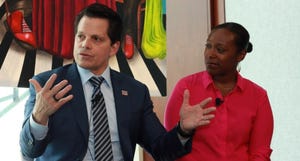
EDI isn't just for large companies, GXS president and CEO Seegers says.
![]()
BP seeking Regional Desktop Coordinator in Houston, TX
Agilent Technologies seeking Marketing Manager in Melbourne, AU
Advancement Project seeking Junior Web Developer in Los Angeles, CA
Johns Hopkins Univ Carey Business School seeking Asst Dean for IS in Baltimore, MD
City of Westland seeking MIS Director in Westland, MI
For more great jobs, career-related news, features and services, please visit our Career Center.
The Greening of IT - Saving Resources Helps the Environment and Cuts Costs
Virtualization, energy-efficient storage and multifunction devices all contribute to a more eco-friendly infrastructure. Hereŭs how your business can get greener and save money at the same time.
read more 
NOTE: Offer valid for U.S., U.S. possessions, & Canada only